How laser resurfacing works
Laser resurfacing delivers a specific wavelength of light that is absorbed by water in the skin. That absorption converts to heat, and the heat either vaporises tissue outright or warms the dermis enough to provoke collagen remodelling. Which of those two things happens is the fundamental divide between ablative and non-ablative lasers.
The appeal of laser over other resurfacing methods is precision. Because different wavelengths are absorbed to different depths, a laser can be tuned to act where the practitioner wants it. The risk is the same precision in reverse: energy delivered too aggressively, or to the wrong skin type, produces burns, scarring and pigment change.
Two effects run in parallel whenever tissue is heated. The first is the immediate removal or coagulation of the target layer. The second is a slower collagen remodelling in the dermis below, driven by the heat that spreads beyond the treated columns. The visible smoothing a patient sees in the first weeks comes largely from the first effect, while the firming that develops over months comes from the second. Understanding that the result arrives in two waves helps explain why final judgement should be reserved for several months after the procedure, not several weeks.
Ablative: CO2 and erbium
Ablative lasers vaporise the surface layers of skin. The two mainstays are the carbon dioxide (CO2) laser and the erbium:YAG laser.
The CO2 laser is the more powerful. It removes tissue and delivers significant heat to the underlying dermis, which drives strong collagen contraction and remodelling. It produces the most dramatic results for deep wrinkles, significant sun damage and scarring, and it carries the longest and most demanding recovery.
Because the CO2 laser leaves so much heat in the dermis, it is the resurfacing tool most capable of tightening as well as smoothing, which is part of its appeal for photodamaged skin. That same heat is what makes recovery prolonged and what raises the stakes if the energy is misjudged, since the margin between an effective treatment and a burn narrows as the depth increases. It is a tool that rewards experience and punishes overconfidence, which is why full ablative CO2 has increasingly given way to fractional delivery in routine practice.
The erbium laser is absorbed by water more efficiently, so it vaporises tissue with less heat spreading to surrounding skin. That means slightly gentler results and somewhat faster healing than traditional CO2, at the cost of less collagen tightening. For a patient who wants meaningful resurfacing with marginally less downtime, erbium is often the middle path within the ablative category.
Ablative laser is the most effective resurfacing tool available and the least forgiving of poor patient selection.
Non-ablative lasers
Non-ablative lasers heat the dermis while leaving the epidermis intact. Because the surface is not removed, recovery is far shorter, often just redness and swelling for a few days. The trade-off is directness: results are milder and usually require a course of several sessions to accumulate a visible change.
This class suits patients with early photoageing, mild texture concerns and fine lines who cannot accept significant downtime. It is a poor choice for someone with deep wrinkles or marked scarring, who will spend money on several sessions and still fall short of what a single ablative treatment would achieve.
The commercial risk with non-ablative lasers is that their gentleness is easy to oversell. A course of several low-downtime sessions is an attractive proposition, and clinics have every incentive to present it as a substitute for stronger treatment. For a patient whose concern is genuinely mild, that is a reasonable path. For a patient with significant damage, it is a slow and expensive way to fall short, and the responsible practitioner will say so rather than book a course that cannot meet the goal.
Fractional delivery
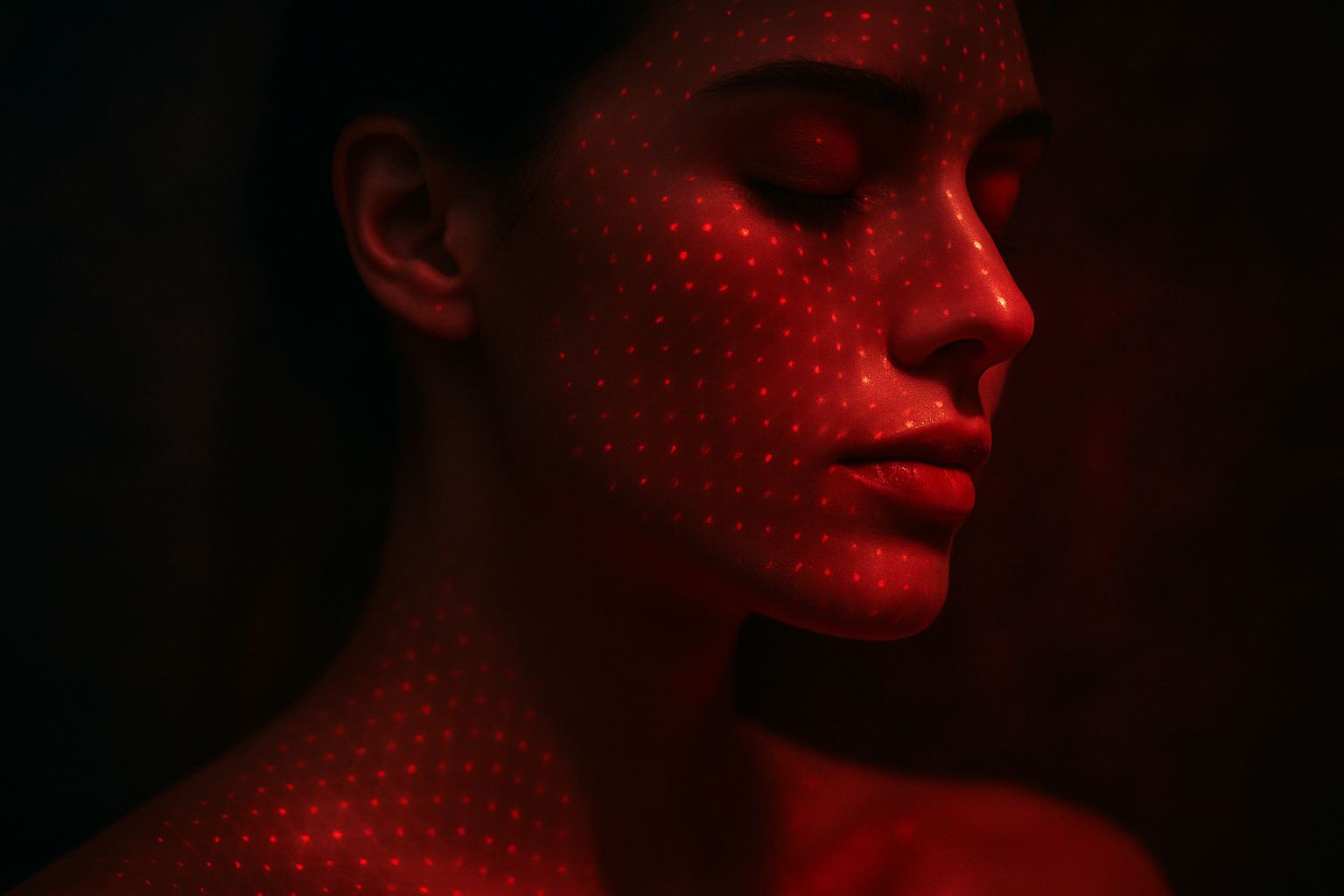
Fractional resurfacing changed the field. Rather than treating the entire surface, a fractional laser creates a grid of microscopic treatment columns, leaving islands of untreated skin between them. Those untreated islands act as a reservoir of healthy cells that speed healing.
Fractional delivery exists in both ablative and non-ablative forms. Fractional CO2 gives much of the power of full ablative resurfacing with meaningfully less downtime and lower risk, which is why it has become the workhorse of the category. Fractional non-ablative devices sit at the gentler end.
The trade-off within fractional treatment is coverage against downtime. Treating a higher density of columns in one session does more but heals more slowly, so many protocols space several lighter fractional sessions rather than one aggressive pass. This staged approach suits patients who cannot take a long single recovery, at the cost of needing to return. It also gives the practitioner more control, adjusting density between sessions in response to how the skin has healed, which is part of why fractional devices have displaced full-field ablation for many indications.
| Type | Surface removed | Strength | Downtime |
|---|---|---|---|
| Full ablative CO2 | Yes, whole surface | Strongest | 2, 3 weeks |
| Erbium ablative | Yes, less heat | Strong | 1, 2 weeks |
| Fractional CO2 | Grid of columns | Strong, staged | 5, 7 days |
| Fractional non-ablative | No, heats only | Mild to moderate | 2, 4 days |
| Full non-ablative | No | Mild | 1, 2 days |
Realistic outcomes and downtime
Realistic expectation setting is where laser marketing most often fails patients. Ablative resurfacing produces genuine, visible improvement in deep wrinkles, texture and photodamage, but it demands a recovery most people underestimate: raw, weeping skin for several days, then prolonged redness that can persist for weeks and, with full CO2, sometimes months.
Non-ablative and fractional treatments trade result for recovery, and the choice between them should be driven by the severity of the concern and how much downtime a patient can genuinely accommodate, not by which sounds most advanced. For laxity specifically, rather than surface texture, other tools may fit better, as our review of what the Endolift evidence actually shows discusses.
Skin type, risk and cost
Skin type shapes the risk profile more than almost any other factor. Ablative resurfacing in darker skin carries a significant risk of post-inflammatory hyperpigmentation and pigment loss, and many practitioners avoid aggressive ablative treatment in higher Fitzpatrick types altogether, favouring gentler non-ablative approaches with careful priming. Sun protection guidance from the British Association of Dermatologists is part of the treatment, not an add-on.
Because these are medical procedures with real complication potential, the setting and the practitioner's registration matter. A laser capable of vaporising tissue is capable of scarring it, and the operator's training is the main safeguard. Our explainer on what an aesthetic clinic actually means in UK law covers how to verify that, and the MHRA regulates the devices themselves.
UK pricing in 2026 runs from roughly £600 to £2,000 for a fractional session, with full ablative resurfacing higher, often quoted as a single procedure rather than a course. Our guide to what aesthetic treatments cost in the UK in 2026 places these figures alongside other skin treatments.
One practical point often missed at consultation is the medication and test-patch question. Patients with a history of cold sores may need antiviral cover before facial laser, because resurfacing can trigger an outbreak, and certain medicines affect healing. A thorough clinic asks about these and, where appropriate, performs a test patch on higher-risk skin before committing to a full treatment. The presence or absence of that conversation is a reasonable measure of how carefully a clinic works.